Tuesday, October 27, 2009

A reason for developed countries to stop agricultural subsidies

"A global fall in agricultural research spending - other than in China - is slowing growth in farm output and will lead to higher world food prices for the first time in five decades, an economist said Tuesday" (China Daily).


If the productivity growth slows in the developed countries don't bother/can't afford to spend as much money on research in the field, maybe they should give it up all together? Comparative advantage doesn't exist for nothing. Maybe if the EU finally reforms its CAP and US drops its subsidies, and instead direct the money to developing countries in Africa to promote modernization and productivity growth in agriculture, everyone would profit - the developing countries from investment, everyone else from lower food prices. Instead, we get a lose-lose situation as described in the article, which is the complete opposite of how Stiglitz (quite convincingly) argues globalization should work.


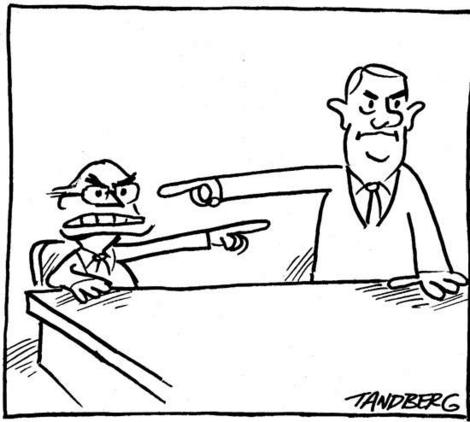
If this were a less academically-inclined blog, I'd feel a lot less resentment from using this meme to describe my feelings:

/facepalm


PS: No, I am not making lots of blogposts just to fill a "quota" after 2 weeks of silence during midterms ^_____^

Who's to blame?


Not to steal the title from the famous work by Alexander Herzen, which, however, has very little to do with economics, but this is the question that seems to be most relevant recently in the lender-borrower relationships. Is it the investors' fault for putting money into risky projects and generating bubble economies, or is it the banks', who do not warn about the risk and care little about fund security?

Well, the wealthy Chinese investors seem to be putting the blame on the banks. While it is difficult to feel compassionate for those guys, at least they're breaking the trend of domestic investors doing nothing to protect themselves during crises while the foreign investors get away with their sins lightly. And though the issue is still up to some legal dispute (with the Chinese courts being of questionable democratic merit), the millionaire Chinese investors may well set an important precedent for the international financial community. If they effectively win this battle, not only will it encourage the major Chinese banks to adopt more cautious policies, but perhaps set a good example for other banks around the world. If not, the careless investment practices may continue to make future look grim, with yet another major financial crisis due to moral hazards by the time we get our PhDs (if Krugman's theory has some merit, that is).


Comment on: http://www.chinadaily.com.cn/metro/2009-10/27/content_8853939.htm

Monday, October 5, 2009

The front against free trade

EU agricultural policy continues to be a front against free trade and global integration. Perhaps it was a mistake for the EU to adapt protectionist policies for its agricultural sector, but it is surely making them pay dearly now. It remains to be seen whether the agriculture ministers yield to the pressure, or go through with their pretty "modernization" rhetoric.


What shows the inefficiency of the EU CAP more than anything is the source of the crisis - the price drop due to overproduction. One would think that exporting the excess would be a viable solution, except that the products will get an even lower price on the global market, if it is able to compete at all. Perhaps the Council of Ministers should go back to Econ 102 to study comparative advantage.


In response to article: http://news.bbc.co.uk/2/hi/business/8289976.stm


PS: I would NOT want to be one of the policemen holding off the crowd.